
AI Readiness and Adoption: Building the Foundation for Successful AI Transformation
WHY AI TRANSFORMATION FAILS WITHOUT READINESS—AND HOW TO MAKE IT WORK?
For training, HR, and operations leaders, artificial intelligence brings both promise and pressure.
On one hand, AI tools can save time, improve quality, and unlock new ways of working. On the other, rolling AI out across an organization often feels overwhelming. Adoption stalls. Employees resist. Leaders ask for results that never fully arrive.
If this sounds familiar, you’re not alone.
Most AI initiatives struggle not because of poor technology or lack of training, but because organizations skip a critical first step: readiness.
At Disruptive Spark, our research and fieldwork show that AI transformation succeeds only when people are emotionally and cognitively ready to adopt change. Without readiness, even the best AI tools fail to deliver value.
THE HIDDEN BARRIER TO AI ADOPTION
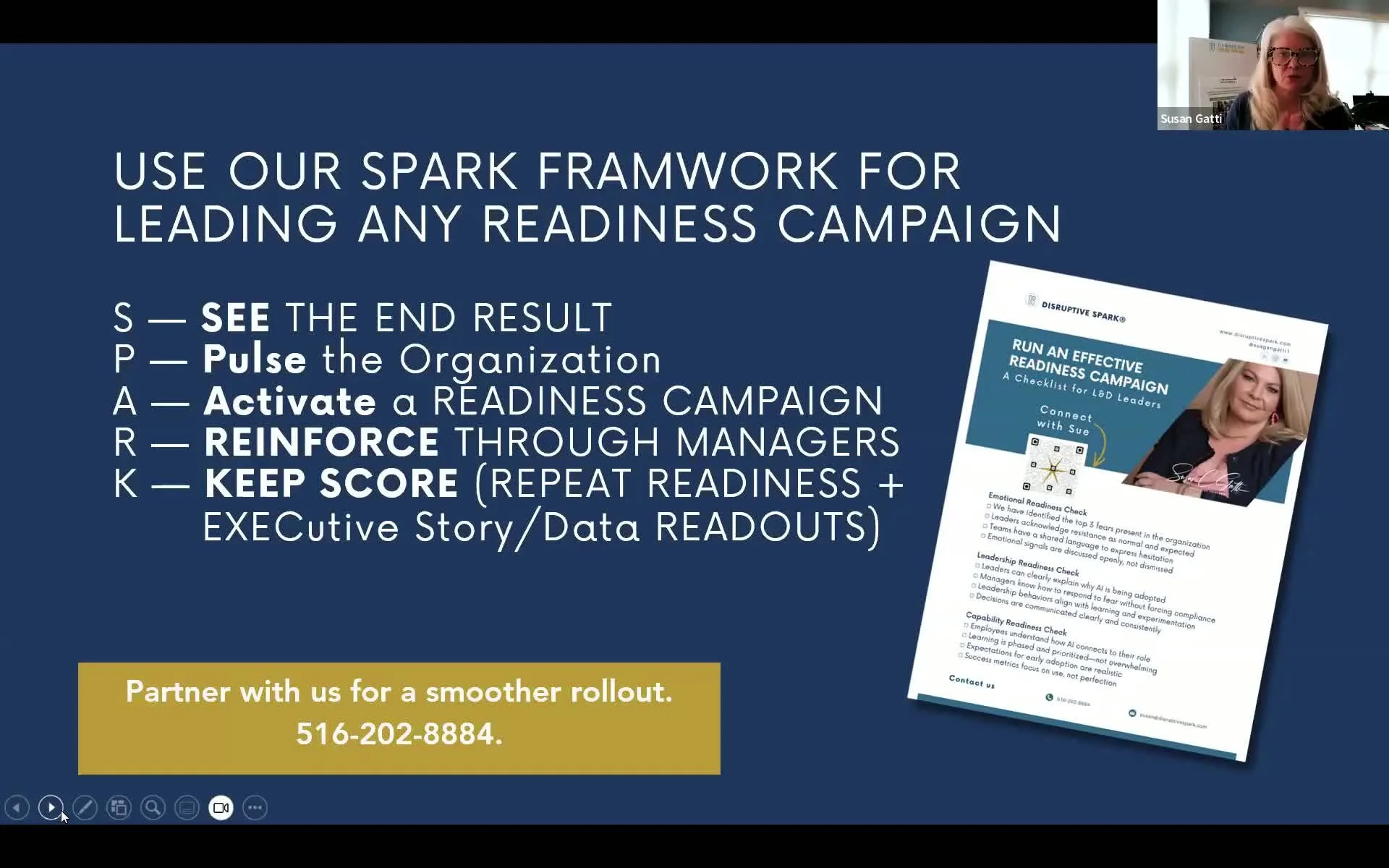
When AI adoption slows or fails, it’s often mistaken for a mindset or motivation issue. In reality, resistance is biological. When people sense uncertainty or threat, their nervous systems shift into protection mode. Learning stops. Avoidance increases.
Common employee concerns include fear of job replacement, uncertainty about ethical use, and fear of failure. These are not performance problems—they are human responses to change.
READINESS VS. TRAINING
Traditional AI rollouts prioritize training first. But training doesn’t work when fear is present. Readiness must come before training to create a safe environment for learning and experimentation.
THE STOPLIGHT READINESS MODEL
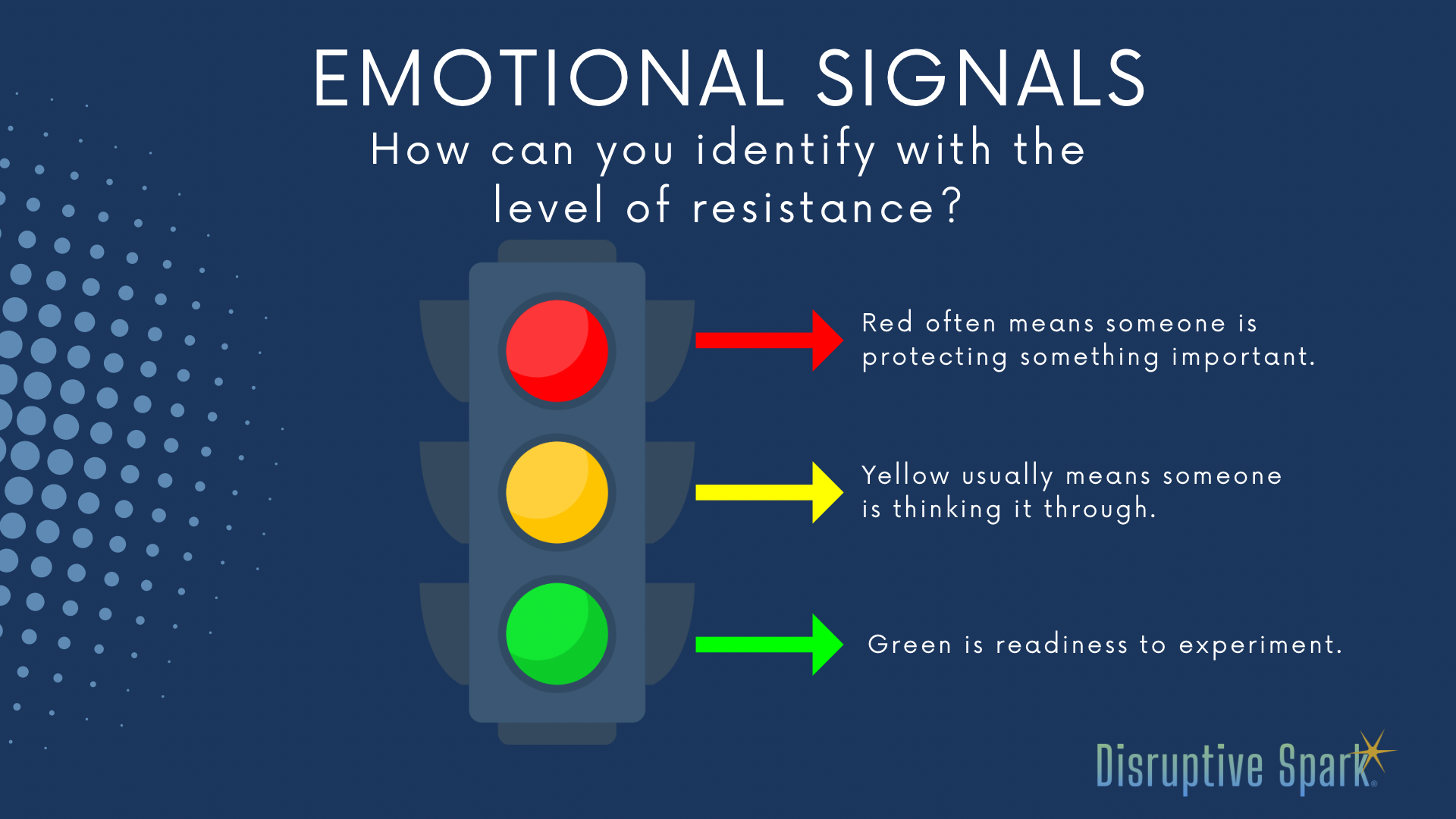
Disruptive Spark uses a Stoplight Model to identify readiness levels:
Red means stop. Fear dominates and no movement occurs.
Yellow means slow. Curiosity is present but confidence is still forming.
Green means go. People feel ready, capable, and engaged.
The goal is not to push people from red to green, but to support steady movement between stages.
LANGUAGE AS A READINESS SIGNAL
Emotional language reveals readiness. Words like 'afraid' and 'dishonest' signal red. Words like 'unsure' indicate yellow. Words like 'I like this' show green readiness.
REFRAMING FEAR INTO CURIOSITY
Reframing helps reduce threat. A statement like 'AI will replace us' can be reframed to 'I want to understand how AI will change our work.' This small shift opens the door to learning.
USING THE WHAT IF METHOD
The 'What If' method reduces pressure. Questions like 'What if we tried this on one small project?' make exploration feel safe and manageable.
MEASURING READINESS WITH DATA
Disruptive Spark’s one-question readiness poll allows leaders to quantify readiness. Organizations typically need to reach a level of 7 before launching AI at scale.
ACTIVATING READY EMPLOYEES
Employees who reach readiness can become guides for others. Peer stories and shared learning build trust faster than mandates.
FINAL THOUGHT
AI transformation works best when people feel safe, curious, and supported. Readiness makes that possible.